
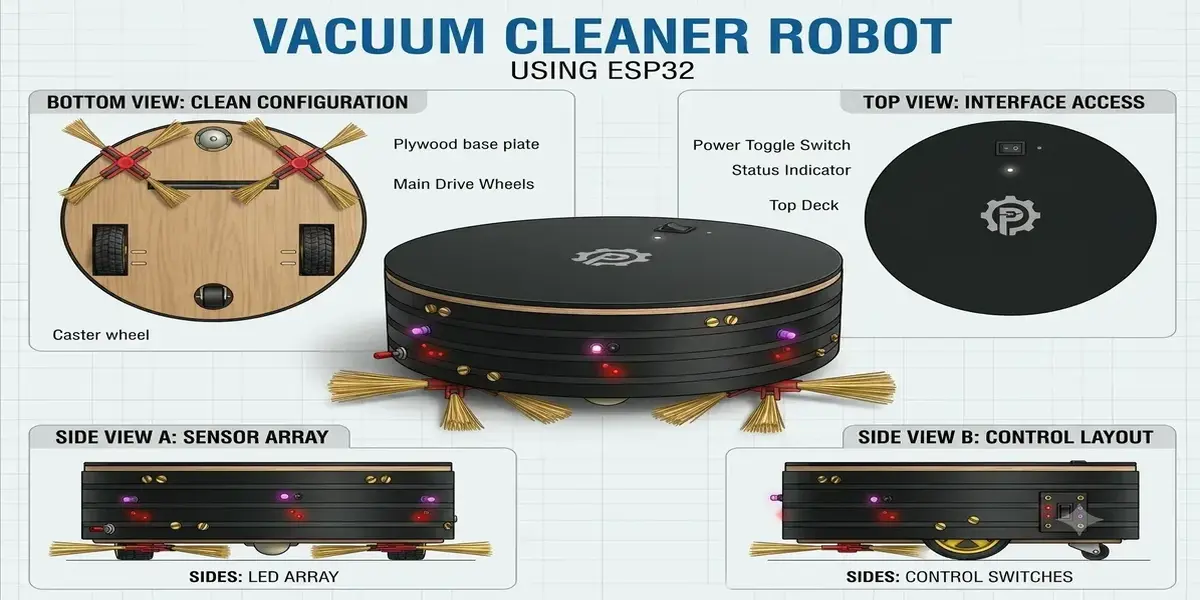
Learn how to build an autonomous DIY vacuum cleaning robot powered by an ESP32 microcontroller, wireless app control, BO motors, and onboard suction mechanisms.
An exhaustive engineering breakdown of mechanical chassis fabrication, brushless DC (BLDC) suction physics, buck converter power electronics, sealed lunchbox dust bin assembly, and wireless smartphone control architecture.
Autonomous cleaning robots have evolved from experimental prototypes to essential smart home automated assistants. While commercial units are widely available, designing and building your own robotic cleaner from raw components provides unmatched practical exposure to embedded microcontrollers, wireless IoT app communication, power electronics, and mechanical design. By integrating an ESP32 Development Board | Doit DevKit V1 | powerful Wroom32 module, step-down buck regulators, series lithium-ion cells, high-torque gear motors, rotating edge wigs, an airtight sealed plastic tiffin box dust container, and a high-efficiency BLDC suction motor, makers can engineer a fully functional smartphone-operated vacuum and mop robot. In this comprehensive, master-level project guide, we explore every single architectural layer, circuit schematic detail, and fabrication step required to build this advanced machine.
| Core System Parameter | Detailed Engineering Specification & Implementation |
|---|---|
| Primary Microcontroller | ESP32 Development Board | Doit DevKit V1 | powerful Wroom32 module managing dual-core processing and wireless app communication. |
| Power & Regulation | 3-string Lithium-Ion battery configuration secured in a dedicated battery holder, regulated safely via a step-down buck converter module. |
| Locomotion & Drive | Dual 100 RPM single-shaft BO motors paired with durable rubber robot wheels, controlled via an L298N driver module. |
| Cleaning & Suction | High-RPM BLDC vacuum suction motor connected to a modified airtight sealed plastic tiffin box dust bin, aided by rotating side wigs and a rear mop pad. |
The operation of an autonomous vacuum and mop cleaning robot relies on the flawless coordination of four critical subsystems operating simultaneously: wireless teleoperation, power distribution, mechanical sweeping wigs, and high-velocity suction extraction.
| Operational Stage | Active Hardware Subsystem | In-Depth Operational Workflow |
|---|---|---|
| 1. Wireless Teleoperation & Command Processing | Smartphone App & ESP32 Development Board | Doit DevKit V1 | powerful Wroom32 module | The user interacts with a custom Bluetooth or Wi-Fi control dashboard on a smartphone. Directional and auxiliary toggle commands are transmitted wirelessly and received by the ESP32 microcontroller, which decodes the data packets and dispatches precise pulse-width modulation (PWM) signals to the motor drivers. |
| 2. Power Distribution & Voltage Regulation | Lithium-Ion Cells, Battery Holder & Buck Converter Module | High-capacity series lithium-ion cells housed inside a secure battery holder deliver the bulk energy required for high-draw motors. Because raw battery voltage can fluctuate and damage logic circuits, a step-down buck converter module cleanly drops and stabilizes the voltage to 5V for the microcontroller and sensor peripherals. |
| 3. Peripheral Sweeping Wigs & Floor Mopping | Side Brushes (Wigs) & Microfiber Mop Pad | As the circular chassis navigates across flooring, dual motor-driven rotating side wigs extend outward past the frame perimeter to sweep dust, pet hair, and debris from tight corners and baseboards directly into the central cleaning path. Simultaneously, a trailing microfiber mop cloth wipes and polishes the cleaned surface. |
| 4. High-Velocity BLDC Vacuum Extraction | BLDC Vacuum Motor & Sealed Plastic Tiffin Box Bin | A high-RPM brushless DC (BLDC) suction motor generates intense negative pressure inside an airtight modified plastic tiffin/lunch box container. This pressure differential creates powerful suction that pulls loosened dust particles through the bottom intake slot and traps them securely inside the sealed dust chamber. |
To ensure maximum reliability, structural stability, and electrical safety during your build, source your exact hardware components directly from the official iTechBuilders store links below:
| Component Category | Specific Part Name & Role in Robot | Official iTechBuilders Store Link |
|---|---|---|
| 1. Processing Core | Main microcontroller handling wireless Wi-Fi/Bluetooth stack and logic control. | ESP32 Development Board | Doit DevKit V1 | powerful Wroom32 module |
| 2. Power & Regulation | Steps down source battery voltage and houses energy cells. |
• Buck Converter Step-Down Module • Lithium Ion Battery (3.7V Cells) • Battery Holder & Series Connector |
| 3. Drive & Locomotion | Propels the circular chassis and controls directional steering. |
• Single Shaft BO Motor | 100 RPM • Robot Wheel 7cm x 4cm DIY |
| 4. Motor Driver | Handles dual high-current DC motor switching and speed control. | L298N 2A Motor Driver Module |
| 5. Suction & Dust Bin | Provides powerful airflow extraction and airtight storage. |
• BLDC Vacuum Suction Motor • Sealed Plastic Tiffin Box (Dust Bin) |
| 6. Assembly Hardware | Secures framework joints, housing enclosures, and wiring. | Glue Gun with Free Glue Sticks |
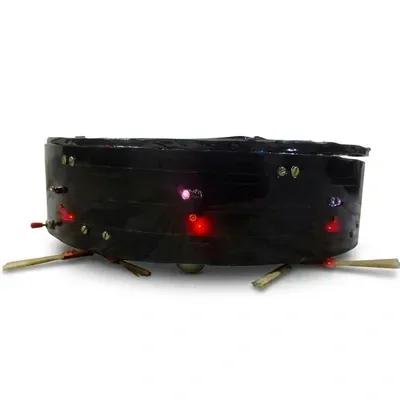
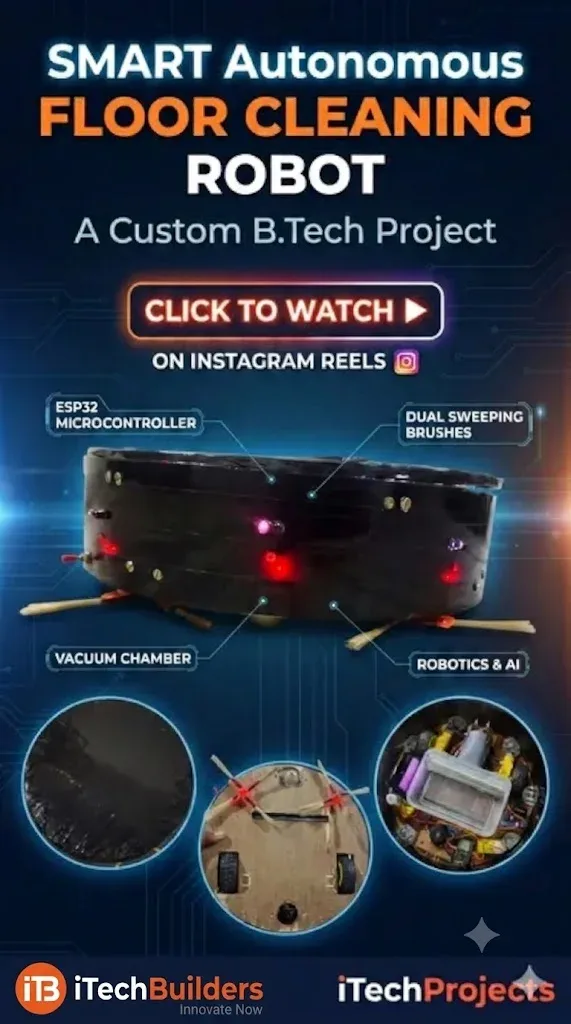
Front profile showcasing the bumper layout and sensor array positioning.
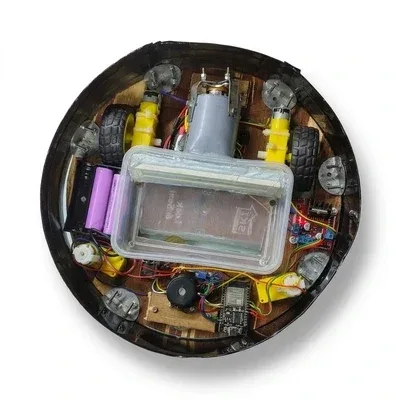
Internal view showing the arrangement of the ESP32, L298N driver, battery pack, and central tiffin box dust chamber.
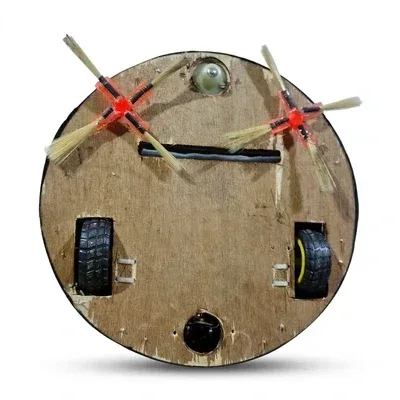
Underside view showcasing the dual side sweeping brushes (wigs), drive wheels, and central vacuum intake slot.
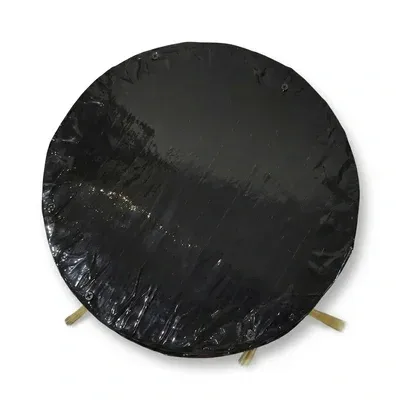
Top protective shell casing secured over the chassis for a clean, professional finish.
Once your base vacuum and mop robot is fully operational, you can easily expand its intelligence and autonomy with these maker upgrades:
Building a custom, fully autonomous ESP32 vacuum and mop cleaning robot combining BLDC suction, buck power regulation, rotating sweeping wigs, and a sealed tiffin box dust container delivers an extraordinary hands-on engineering project. By sourcing high-grade, reliable hardware modules directly from iTechBuilders, hobbyists, engineering students, and makers can bring professional-grade automated cleaning devices to life.
Explore genuine ESP32 Doit DevKit V1 boards, buck converters, BLDC motors, battery holders, and robotics parts at iTechBuilders.
Shop Components Now
Comments
0