
Learn what a sensor is, how different sensors work (temperature, motion, light, sound, pressure), and their real-world applications in robotics, IoT, Arduino, and ESP32 projects.Learn what a sensor is, how different sensors work (temperature, motion, light, sound, pressure), and their real-world applications in robotics, IoT, Arduino, and ESP32 projects.
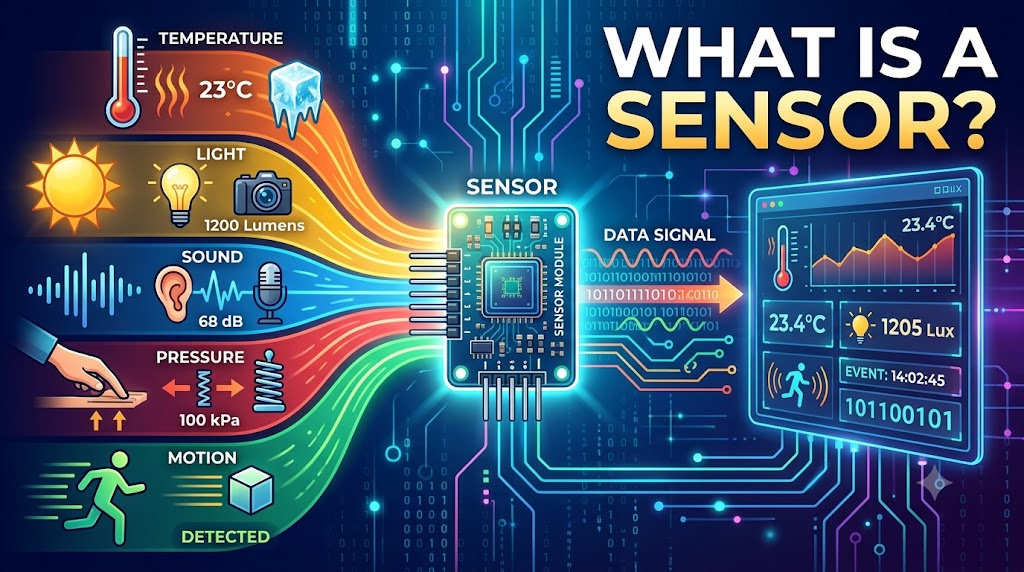
What is a Sensor? Types, Working Principle, and Applications Explained In modern technology, from smartphones and smart home devices to industrial automation and robotics, sensors act as the primary bridge connecting the physical world with the digital world. But what exactly is a sensor, how does it work, and why is it essential in electronic systems? In this comprehensive guide, we will break down the definition of a sensor, its working principles, major types of sensors, and practical applications in microcontrollers like Arduino Uno and ESP32. What is a Sensor? A sensor is an electronic device that detects physical inputs—such as heat, light, sound, pressure, motion, or moisture—and converts them into a measurable electrical signal (analog or digital). This electrical signal is then sent to a controller, such as a microprocessor, Arduino Uno, or ESP32, where the data is processed to trigger an action, display information on a dashboard, or make automated decisions. How Does a Sensor Work? The fundamental working process of any sensor system involves three key stages: Physical Input Detection: The sensor detects environmental physical phenomena (e.g., ambient temperature, light level, sound wave, or physical contact). Signal Conversion: The sensing element translates the physical measurement into an electrical signal (voltage, current, or frequency). Data Signal Processing: The converted signal is passed to an electronic control unit or microcontroller board, where it is converted into readable data or visual graphics. Major Types of Sensors Used in Embedded Systems & IoT Sensors come in various forms depending on the physical parameter they measure. Here are the most common types: 1. Temperature Sensors Temperature sensors measure heat or cold levels in a given environment. Examples: DHT11, DHT22, LM35, Thermocouple. Applications: Smart thermostats, climate control systems, weather stations. 2. Light Sensors Light sensors measure ambient brightness or luminous flux. Examples: LDR (Light Dependent Resistor), BH1750. Applications: Automatic streetlights, smartphone auto-brightness, camera exposure systems. 3. Sound & Acoustic Sensors Sound sensors detect acoustic vibrations or noise levels in the surrounding space. Examples: Electret microphone module, sound detection sensor module. Applications: Voice-activated devices, acoustic noise monitoring, smart home security. 4. Pressure & Touch Sensors Pressure sensors measure mechanical force or atmospheric pressure, while touch sensors respond to tactile input. Examples: BMP280, Force Sensitive Resistor (FSR), TTP223 Touch Sensor. Applications: Touchscreen displays, tire pressure monitoring, altitude measurement in drones. 5. Motion & Proximity Sensors Motion sensors detect movement or proximity of nearby objects without physical contact. Examples: PIR Motion Sensor, HC-SR04 Ultrasonic Sensor, IR Proximity Sensor. Applications: Intruder alarms, automatic door openers, obstacle detection in robotics. Analog vs. Digital Sensors When building projects with microcontrollers like Arduino or ESP32, sensors are broadly classified into two categories: Analog Sensors: Produce a continuous voltage signal proportional to the physical parameter (e.g., LDR, LM35). Digital Sensors: Convert data internally and transmit discreet digital signals or binary data over protocols like I2C, SPI, or UART (e.g., DHT22, MPU6050). Applications of Sensors in Real Life Sensors are the backbone of modern automation and Smart IoT platforms: Internet of Things (IoT): Remote environmental monitoring, smart agriculture, and telemetry. Robotics: Line-following robots, self-driving vehicles, and automated robotic arms. Industrial Automation: Predictive maintenance, factory process control, and machine safety systems. Consumer Electronics: Smartwatches tracking heart rates, automated home lights, and smart appliances. Conclusion Sensors are indispensable components in modern electronics and embedded system design. Whether you are building simple DIY electronics projects or designing advanced industrial IoT automation systems, understanding how sensors capture and process data is essential.
Comments
0