
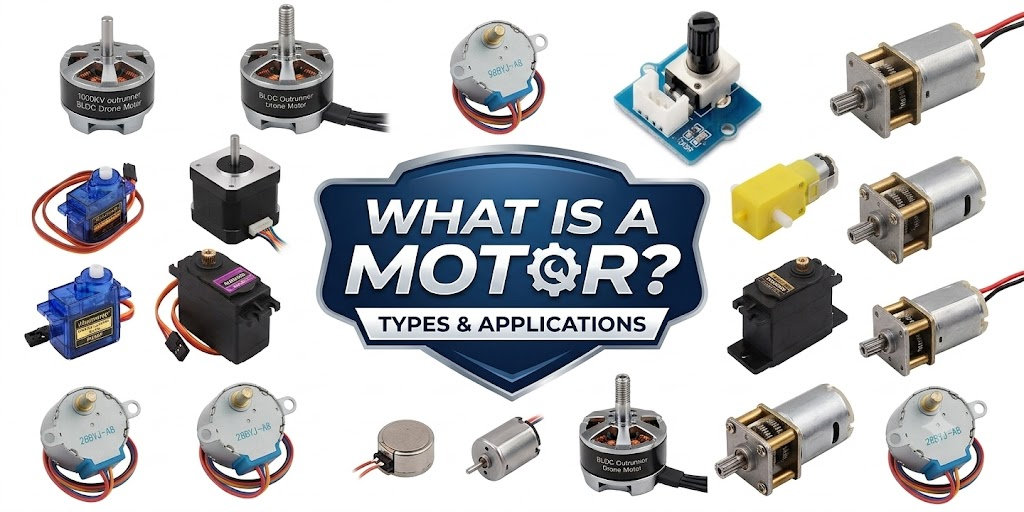
Learn what an electric motor is, how it converts electrical energy to mechanical motion, and explore the major types of motors used in electronics, including DC geared motors, servos, steppers, and BLDC drone motors.
What is a Motor? Types, Working Principle, and Applications Explained Electric motors are the muscular force behind almost every automated mechanism, robotic project, and electronic device today. Whether it is turning the wheels of a mobile robot, adjusting the precise angle of a camera mount, or spinning the propellers of a high-speed quadcopter drone, motors make physical motion possible in the digital world. In this beginner-friendly guide, we will explore what an electric motor is, how it works, and the major types of motors used in modern DIY electronics and embedded systems. What is an Electric Motor? An electric motor is an electromechanical device that converts electrical energy into mechanical energy (rotational force or torque). When connected to a power source and controlled by microcontrollers such as an Arduino or ESP32, an electric motor allows circuit boards to interact dynamically with the real physical world by driving wheels, robotic joints, levers, or blades. How Does an Electric Motor Work? The fundamental working principle of an electric motor relies on electromagnetism: Current Flow: An electric current passes through wire coils (windings) inside the motor. Magnetic Field Generation: The current creates a temporary magnetic field around the coils. Repulsion & Attraction: This magnetic field interacts with permanent magnets (or opposing electromagnets) inside the motor body (stator/rotor). Rotational Motion: The opposing forces cause the rotor and central shaft to rotate, producing mechanical torque. Major Types of Motors Used in Electronics & Robotics As shown in our component guide banner, electronic projects utilize several specialized motor types depending on speed, torque, and precision requirements: 1. Battery Operated (BO) Motors Low-cost plastic gearhead motors ideal for lightweight mobile robots. Common Examples: Single Shaft BO Motor (100 RPM), Dual Shaft BO Motor (60 RPM / 150 RPM). Key Use: Line follower robots, obstacle-avoiding cars, and DIY toy vehicles. 2. 12V DC Geared Motors Heavy-duty metal-geared motors designed to deliver high torque for pushing heavier loads. Common Examples: 12V 100 RPM Center Shaft Motor, 12V 300 RPM Side Shaft Motor. Key Use: All-terrain RC rovers, combat bots, and automated conveyor tracks. 3. Servo Motors (SG90, MG995, MG996R) Motors designed for precise angular positioning (typically 0 ∘ −180 ∘ ) using PWM control signals. Common Examples: TowerPro SG90 (9g Micro Servo), MG996R Metal Gear Servo. Key Use: Robotic arm joints, pan-tilt camera platforms, and steering systems. 4. Stepper Motors (28BYJ-48, NEMA 17) Motors that move in discrete step angles rather than continuous rotation, offering exact positional holding without overshoot. Common Examples: 28BYJ-48 5V Stepper, NEMA 17 Bipolar Stepper. Key Use: 3D printers, CNC routers, and automated sliders. 5. Brushless DC Motors (BLDC) High-efficiency, brush-free motors capable of achieving extremely high rotational speeds (RPM). Common Examples: 1000KV / 1400KV Outrunner BLDC Motors. Key Use: Drones, quadcopters, and RC aircraft propulsion. 6. Coreless & Coin Vibration Motors Compact motors designed to produce tactile haptic feedback or vibration. Common Examples: 10mm Flat Coin Vibration Motor, Micro Coreless DC Motor. Key Use: Smartphone haptics, wearable devices, and mini RC drones. Conclusion Understanding the distinct features of each motor type helps you choose the right component for your hardware build. Whether you need the high speed of a BLDC motor, the high torque of a 12V DC geared motor, or the precision angle of an SG90 servo, choosing the right motor ensures optimal performance for your electronics and robotics projects!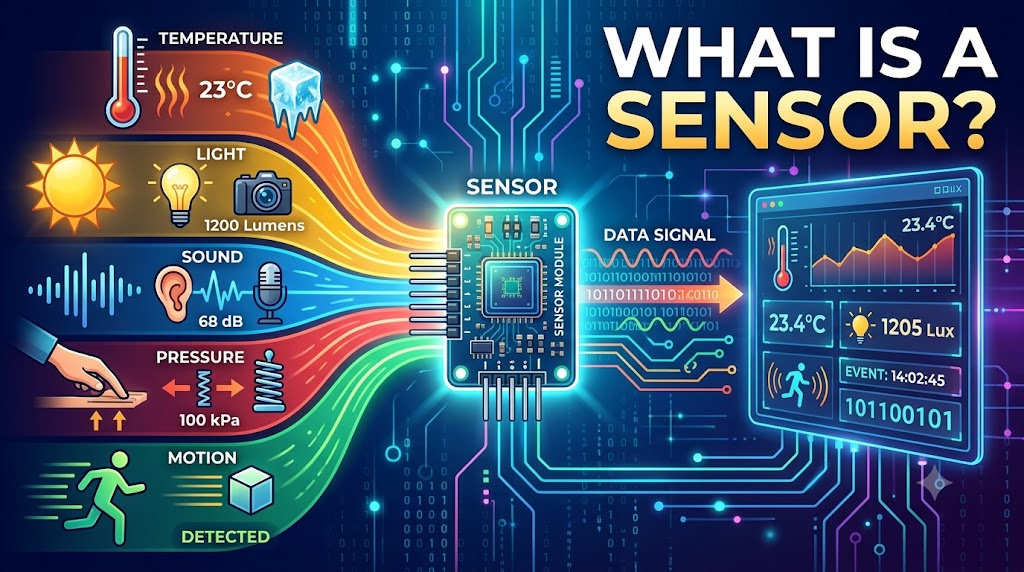
Comments
0